
Essential Tips for Selecting a Compact Battle Belt IFAK
A compact battle belt IFAK can make emergency gear easier to carry while keeping important medical supplies within quick reach. The right setup improves comfort, mobility, and organization without adding unnecessary bulk. Choosing the correct configuration allows users to move confidently while maintaining access to critical first-aid essentials during demanding situations.
Focus On Lightweight Design
A compact setup should remain easy to wear for extended periods. Excessive weight can reduce comfort and slow movement.
Key points to consider include:
- Lightweight pouch materials
- Slim profile construction
- Minimal unnecessary attachments
- Balanced weight distribution
- Comfortable fit around the waist
A well-balanced setup helps reduce fatigue while improving mobility during active use.
Prioritize Fast Accessibility
Quick access is one of the most important features of any battle belt IFAK. Medical supplies should be reachable without confusion or delay.
Look for features such as:
- Pull-tab opening systems
- Easy-grab handles
- Organized internal compartments
- Clear item placement
- Secure but simple closures
Efficient access allows essential supplies to be retrieved smoothly during stressful moments.
Choose Durable Materials
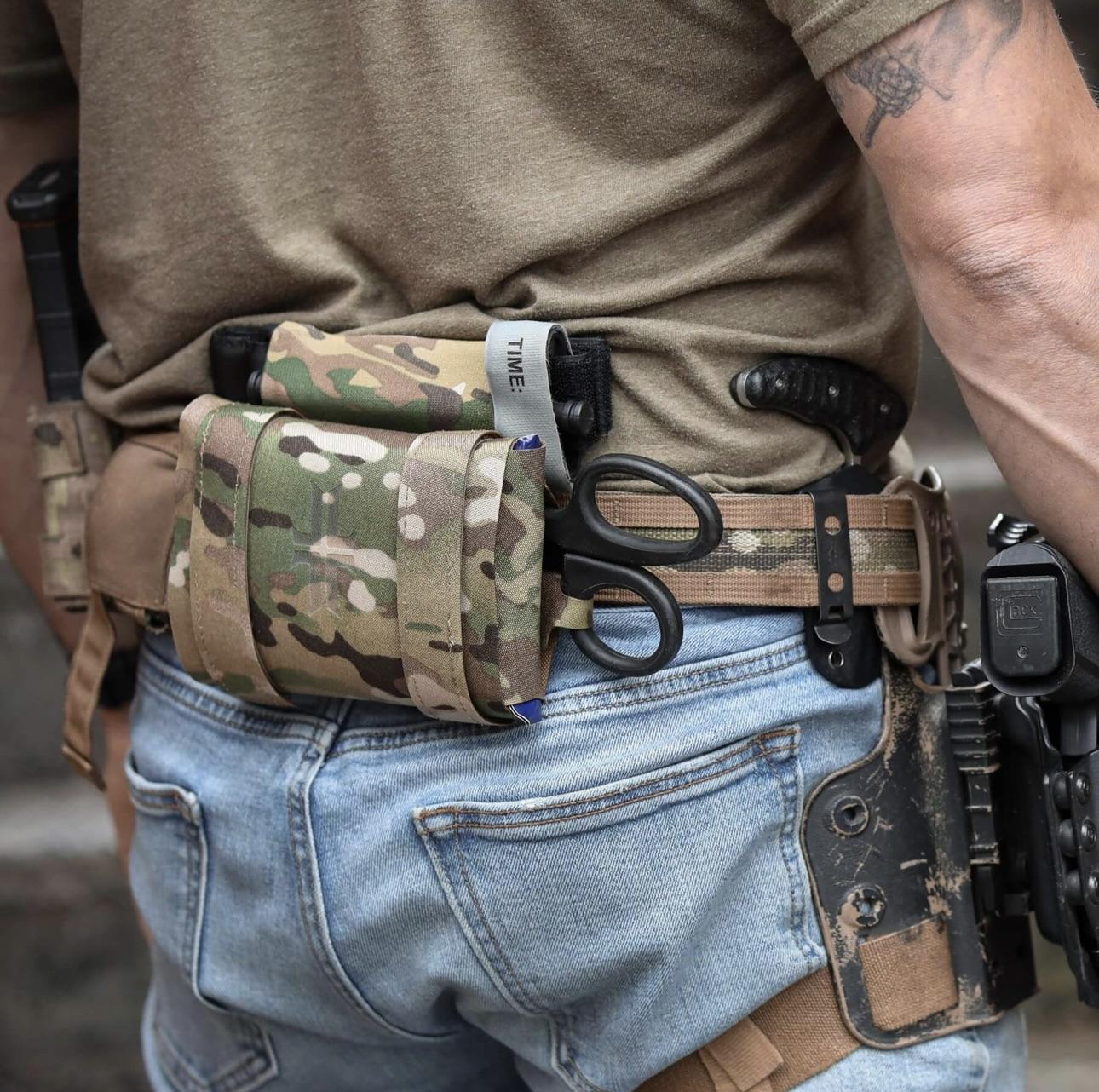
Strong materials help the IFAK remain dependable under repeated use. Durable construction also protects medical supplies from dirt, moisture, and rough handling.
Important qualities include:
- Reinforced stitching
- Abrasion-resistant fabric
- Reliable buckle systems
- Strong retention straps
- Weather-resistant surfaces
High-quality construction supports long-term reliability and dependable performance.
Ensure Proper Belt Compatibility
A compact IFAK should fit securely on the battle belt without shifting excessively. Proper attachment improves stability and comfort.
Helpful features may include:
- Adjustable mounting options
- Secure attachment loops
- Stable positioning on the belt
- Compatibility with different pouch layouts
- Flexible placement options
A secure fit prevents unnecessary movement while keeping the pouch accessible.
Avoid Overloading the Pouch
Compact designs work best when packed with carefully selected essentials. Carrying too many items can create bulk and reduce efficiency.
Useful compact medical items often include:
- Compression bandages
- Protective gloves
- Medical shears
- Gauze supplies
- Tourniquet storage space
A streamlined setup improves organization while maintaining practical functionality.
Consider Comfort during Movement
Comfort plays a major role when wearing belt ifak a battle belt for long periods. A compact IFAK should not interfere with sitting, kneeling, running, or bending.
Features that improve comfort include:
- Rounded pouch edges
- Flexible mounting systems
- Low-profile design
- Reduced pressure points
- Secure body positioning
Comfort-focused setups support smoother movement and better overall performance.
Evaluate Internal Organization
Good organization prevents clutter and helps users locate supplies quickly. Compact does not mean disorganized.
Helpful internal features include:
- Elastic retention bands
- Separate storage sections
- Fold-out panels
- Clearly arranged compartments
- Efficient use of space
An organized layout saves valuable time when accessing emergency gear.
Select a Reliable Retention System
Medical supplies should remain secure while moving through demanding environments. Reliable retention keeps equipment stable without slowing access.
Important retention qualities include:
- Strong closures
- Adjustable tension systems
- Secure internal straps
- Stable pouch structure
- Quick-release capability
A dependable retention system protects essential supplies while maintaining readiness.
Selecting a compact battle belt IFAK involves balancing accessibility, comfort, durability, and organization. A lightweight and well-organized setup improves efficiency while supporting quick response capabilities. By focusing on secure attachment, smart storage, and comfortable wear, users can create a practical medical setup that remains dependable in a wide range of situations.
